From Alatau City to the Capital: How Kazakhstan’s Air Taxi Network Will Develop
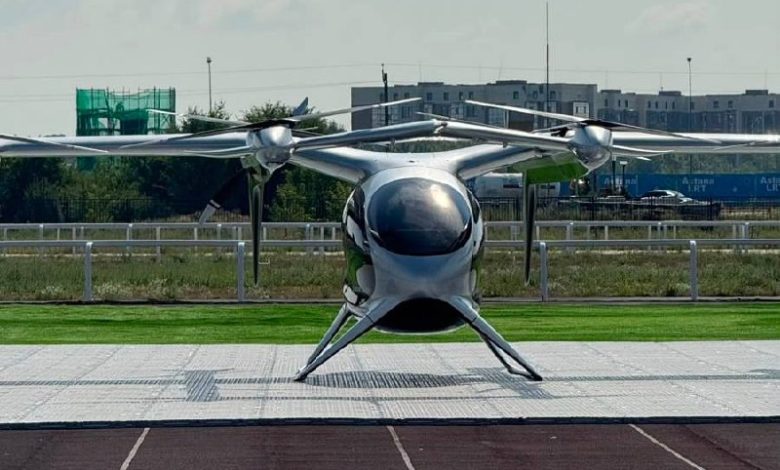
Tiek.kz reports that the developers’ main strategic goal at this stage is to create a reliable testing environment and the necessary infrastructure based in Alatau City. The introduction of air taxis in other regions of Kazakhstan will follow a strictly phased plan.
Route Network and Unified Airspace
Responding to questions about possible flights in Astana and the Burabay resort area, Sergey Khegay said it was too early to discuss such plans. Following successful trials in Alatau City, the project is expected to be gradually integrated into Almaty’s transport system and then expanded to tourist destinations in the Almaty region.
The key condition for a large-scale expansion of the flight network will be the creation of a sophisticated multi-level navigation system. Kazakhstan already has the “upper level” — the traditional Air Traffic Management (ATM) system. Developers now need to establish the lower and middle levels — Unmanned Traffic Management (UTM) and Urban Air Traffic Management systems — and ensure their full and seamless integration.
Pilot Requirements and the Evolution of Control
At the initial stage, commercial air taxi operations will be carried out exclusively with pilots on board.
- International-class pilots: The aircraft will be operated by certified professionals holding licences issued by recognised aviation authorities around the world, such as the Federal Aviation Administration (FAA) of the United States.
- Ground infrastructure: In the future, stations will be built along all routes to continuously measure signals and transmit positioning accuracy data to a central navigation centre.
- Remote control: As the technology develops, a new profession — the remote pilot — will emerge. The specialist will operate from the ground, while direct manual intervention in flight control and landing will only be required in the event of signal failures or deviations from the designated route.
“Our task now is to create the lower and middle levels of the air traffic management navigation system and integrate them with the existing ATM system. Only when all of this is unified and operates on a large scale without failures will the project begin expanding to other regions of Kazakhstan,” Sergey Khegay emphasised.