“Kazakhstan is a Whole Continent”: Foreign Guests Praise Flamingo Fest and the Secrets of Korgalzhyn’s Pink Birds
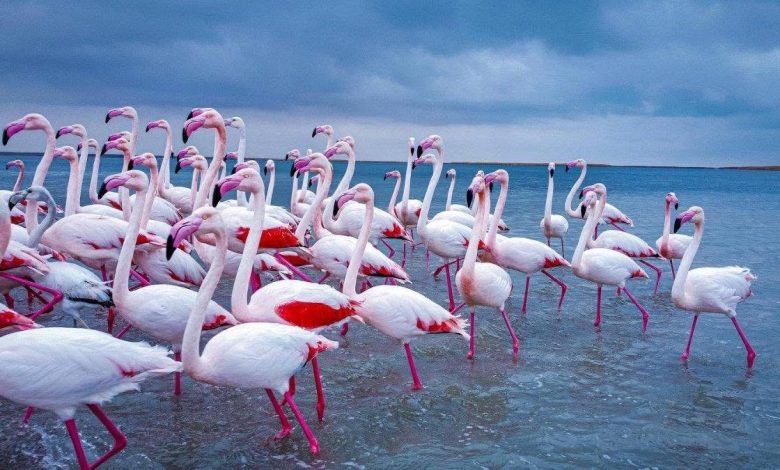
Korgalzhyn, Kazakhstan — The massive cultural and eco-tourism festival, Flamingo Fest 2026, recently took over the village of Korgalzhyn in the Akmola region. Designed to showcase the area’s unique natural wealth to the world, the event drew locals, capital residents, journalists, and a large diplomatic corps. As reported by Tiek.kz, foreign guests were left mesmerized by the sheer scale of Kazakhstan’s wilderness.
First Impressions: From National Games to Endless Steppes
For many international visitors, the journey to this protected reserve—located just 130 kilometers from Astana—was a revelation. Aleška Simkić, the European Union Ambassador to Kazakhstan, admitted she had long dreamed of visiting the area.

“Although I have been working in Kazakhstan for a few years, this is my first time in Korgalzhyn,” the EU Ambassador shared. “We have all heard so much about the flamingos. The nature and the endless steppes of this region are simply beautiful. I travel a lot, and I absolutely love the nature of Kazakhstan.”
Lauris Rumpans, a representative of the Latvian Embassy, was equally captivated by both the local ecology and Kazakh culture.
“We watched the concert, listened to national instruments, and I even saw the traditional game of asyk atu for the first time—it’s fascinating!” Rumpans noted. “While we didn’t manage to spot the flamingos this time, I will definitely return when it’s quieter so as not to scare the birds. You know, looking at a map, it is impossible to fully grasp how huge Kazakhstan is. Only when you are here do you realize that this country is like a whole continent.”
Unlocking the Region’s Tourism Potential
Originally launched last year near the historical Bytygai complex, Flamingo Fest was moved to the village center this year for better accessibility. The central square was transformed with traditional yurts, artisan fairs, and the Flamingo Art exhibition, accompanied by cultural performances.
Almas Alin, the Akim (Head) of the Korgalzhyn district, emphasized that the festival’s primary goal is to boost eco-tourism while fiercely protecting the delicate local ecosystem.
“The Korgalzhyn district is home to 365 bird species and features a unique lake that attracts massive flocks of flamingos,” Alin explained. “Currently, the district welcomes about 2,000 tourists a year. Through this festival, we aim to double or even triple that number.”
Bird “Kindergartens” and Other Flamingo Secrets
The true stars of the region are the pink flamingos. During tours at the Korgalzhyn State Nature Reserve’s visitor center, ornithologists revealed a fascinating biological quirk: flamingos actually send their babies to “daycare.”
About 3-4 days after hatching, adult flamingos gather all the gray, short-necked chicks into one massive group—a literal bird “kindergarten.” A few adult “educators” stay behind to guard the young, while the rest of the parents fly off to other lakes to forage for food, returning only in the evening. Amazingly, each parent can recognize its specific chick by its call in a crowd of thousands.
5 More Amazing Flamingo Facts:
-
The Secret to the Pink: They aren’t born pink. Their vibrant color comes from a diet rich in carotenoids, found in the brine shrimp, mollusks, and algae they eat.
-
Sleeping on One Leg: This iconic stance helps the birds conserve body heat and save energy. Their joints lock into place, allowing them to stand on one leg without any muscle strain.
-
Upside-Down Eaters: Unlike humans, a flamingo’s upper jaw is movable, not the lower. To eat, they flip their heads upside down underwater to filter mud and catch food.
-
Bird “Milk”: Flamingos feed their young with a special “crop milk” secreted from glands in their digestive tract. It is incredibly rich in fats and proteins and starts out bright red or yellow.
-
Loyalty and Flight: Flamingos are monogamous and raise their chicks together. To take flight, they require a “runway” to build speed over water or land.

The Mysteries of an Ancient Sea
The Korgalzhyn Nature Reserve, established in 1958, is a UNESCO World Heritage site and Central Asia’s first biosphere reserve.
Hydrologically, the Tengiz-Korgalzhyn depression is the ancient remnant of the Eocene Sea that covered this land millions of years ago. Interestingly, the salinity of Lake Tengiz is higher than that of the World Ocean, creating the perfect environment for the Artemia brine shrimp—the flamingo’s favorite delicacy.
As for the name “Korgalzhyn,” historians debate two origins. One theory points to the jyngyl (tamarisk) shrub that grows abundantly in the area. The other traces it to a Mongolian word for “mirage”—a fitting name for an endless steppe that, from a distance, shimmers like a vast body of water.