Historic Return: Second Tiger Released in Kazakhstan as Citizens Offered Special “Tiger” Bank Card
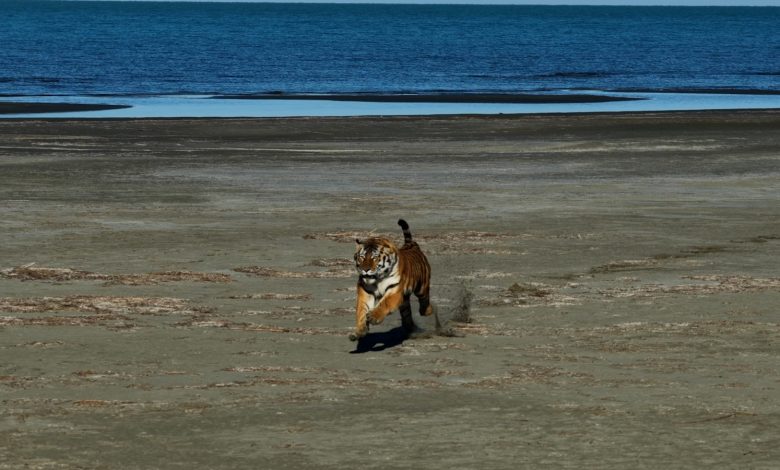
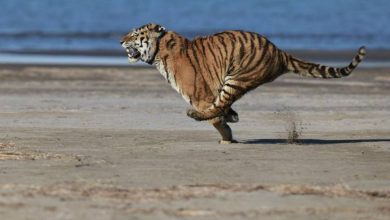
Astana — On October 31, 2026, a historic event took place within the Ile-Balkhash State Nature Reserve: a male Amur tiger named Amur was released into his natural habitat. He is the second apex predator to be returned to the wild in Kazakhstan after the species was completely driven to extinction in the mid-20th century due to human activity. This decades-long reintroduction program unites the efforts of the state, environmentalists, and major corporate sponsors, Tiek.kz reports.
Predator Adaptation and Future Releases
Previously, on July 31, a female tiger named Umit was successfully released into the reserve. According to the Minister of Ecology and Natural Resources, Alibek Kuantyrov, the two predators are currently located 20 to 25 kilometers apart.
“We deliberately released the female first so she could establish her territory, undergo adaptation, and leave scent marks. The male must find her by following these tracks. All this work relies strictly on biological data,” the Minister explained.

Prior to his release, Amur underwent comprehensive veterinary examinations, demonstrated his hunting prowess, and was fitted with a satellite tracking collar. Two tiger cubs, Turan and Ussuri, were also brought to Kazakhstan from Russia. They are currently being raised in special enclosures, with their release into the wild scheduled for the spring or summer of next year.
To ensure the tigers can survive independently, the area of the Ile-Balkhash reserve was expanded to 450,000 hectares. To establish a reliable prey base, over 200 Bukhara deer and 140 kulans were preemptively relocated to the Ili River delta. The Amur tiger was selected for this project after molecular genetic studies confirmed their complete identicality with the extinct Turanian tiger.
Public Safety and SMS Alerts
Special attention during the press conference was given to the safety of residents in nearby settlements, particularly the village of Karauyl. According to Alibek Kuantyrov, a specialized anti-conflict group comprised of trained locals has been established.
“The territory is divided into zones. There is a multi-kilometer ‘green zone’ where the tigers roam. If an animal enters the ‘yellow zone,’ a response is automatically triggered—people receive SMS alerts, and the anti-conflict team uses specialized equipment to drive the predator back. Should an attack on livestock occur, we have an international compensation fund that will quickly reimburse the damages. However, tigers do not attack without reason; it requires provocation from a human,” the head of the Ministry of Ecology emphasized.

Freedom Holding Corp. CEO Timur Turlov added that the alert system could also be integrated into mobile banking applications, allowing people who physically enter a risk zone based on geolocation to receive push notifications. However, the chances of encountering a predator remain minimal, as unauthorized entry into the reserve is strictly prohibited by law.
Corporate Support and “Tiger” Cashback
The project is being realized with massive support from international partners (WWF, UNDP, the Amur Tiger Center) and major businesses. Timur Turlov stated that since 2024, Freedom Holding has directed over 102 million tenge toward the project, covering animal transportation and enclosure outfitting costs. By early 2027, the holding plans to launch a unique, public-facing financial product.
“We plan to issue a special ‘Turan Jolbarysy’ bank card with a 10% cashback feature. It will work like this: when people pay using our cards, they do not receive the cashback themselves. Instead, this money is doubled by the bank and transferred directly to the Turanian tiger support fund. This will allow our clients to become part of this ambitious project and be ‘true tigers.’ I will be the first to open this card,” Turlov announced.

Strategic Plans: 50 Tigers and Asiatic Cheetahs
The reintroduction program was made possible through direct agreements between the Presidents of Kazakhstan and Russia. According to the strategic plan, 10 predators will be introduced to Kazakhstan by 2033.
“Our ultimate goal is to form a stable, self-reproducing population of 50 individuals within 15 to 20 years,” Alibek Kuantyrov summarized.
The Minister also unveiled a glimpse into future ecological initiatives: drawing on India’s successful experience, Kazakhstan is currently studying the feasibility of restoring the population of the extinct Asiatic cheetah on its territory.